
Categories
Speciality Areas
Combining Wheelchair Accessories Safely: What Prescribers Need to Consider
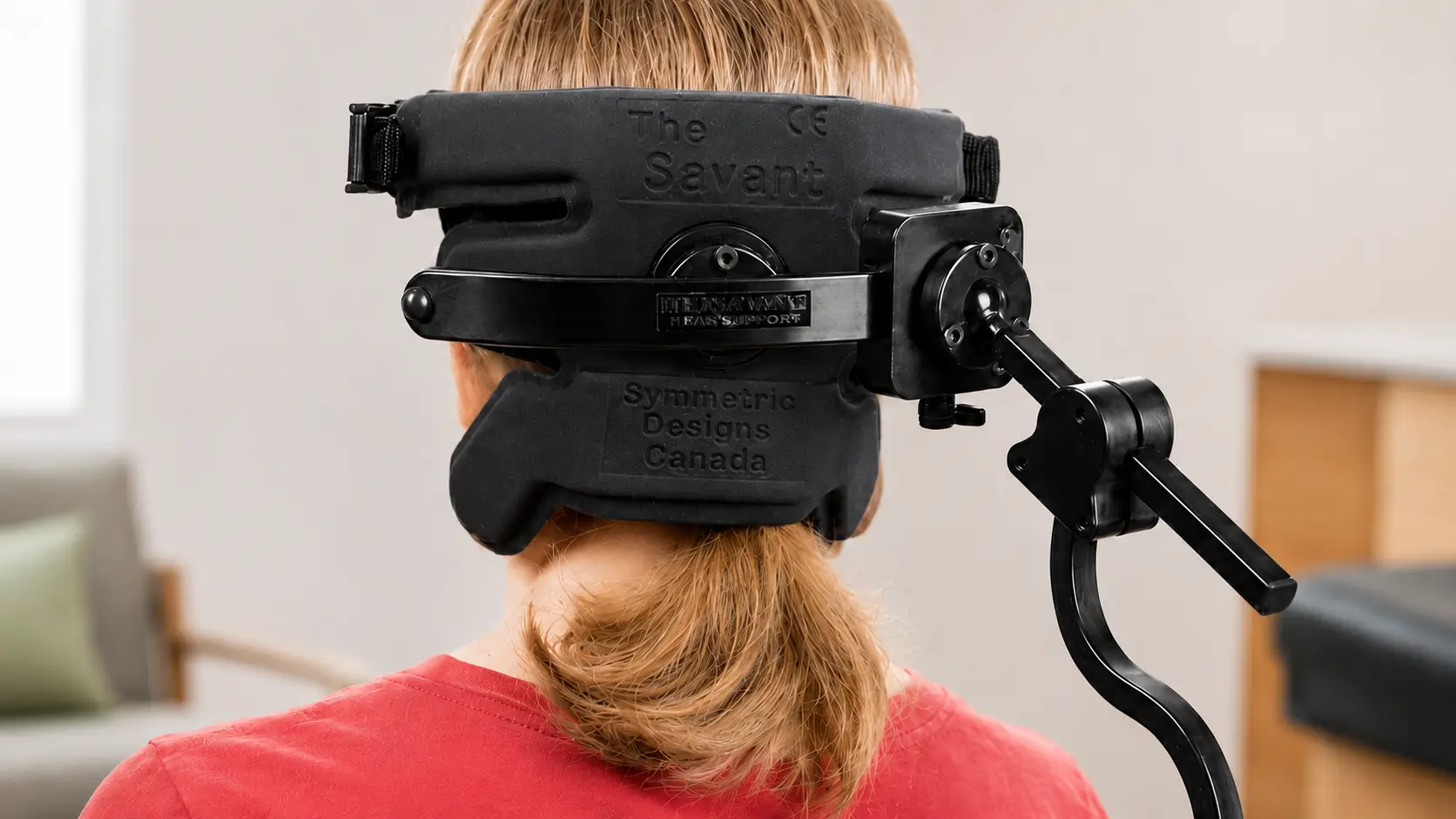
The off-the-shelf solution may not be ideal, so what do I need to consider when combining additional products to create a better outcome for my client?
Clients in need of assistive products for improved health, well-being, or safety, frequently have needs that are only partly satisfied by an off-the-shelf base product. To meet these needs appropriately many businesses have been established to produce accessories to broaden the applicability of, and enhance, these base products for more complex client groups: they have developed specialist add-on products designed to enhance the off-the-shelf products. Prescribers need to assess the risks versus the benefits of these accessories for their clients’ well-being.
The fact that we have a choice of solutions is potentially good news for our clients. The challenge is for prescribers to know what options there are, and then work through the detail to see which accessory might add the most value for their client. The proliferation of increasingly sophisticated alternative accessories adds to the challenges. Some products solve previously unanswered needs, while others are copies of other products that just offer the same benefits at a lower cost. The key primary considerations are whether the products benefit the client and that they are safe.
Mounting accessories onto wheelchairs
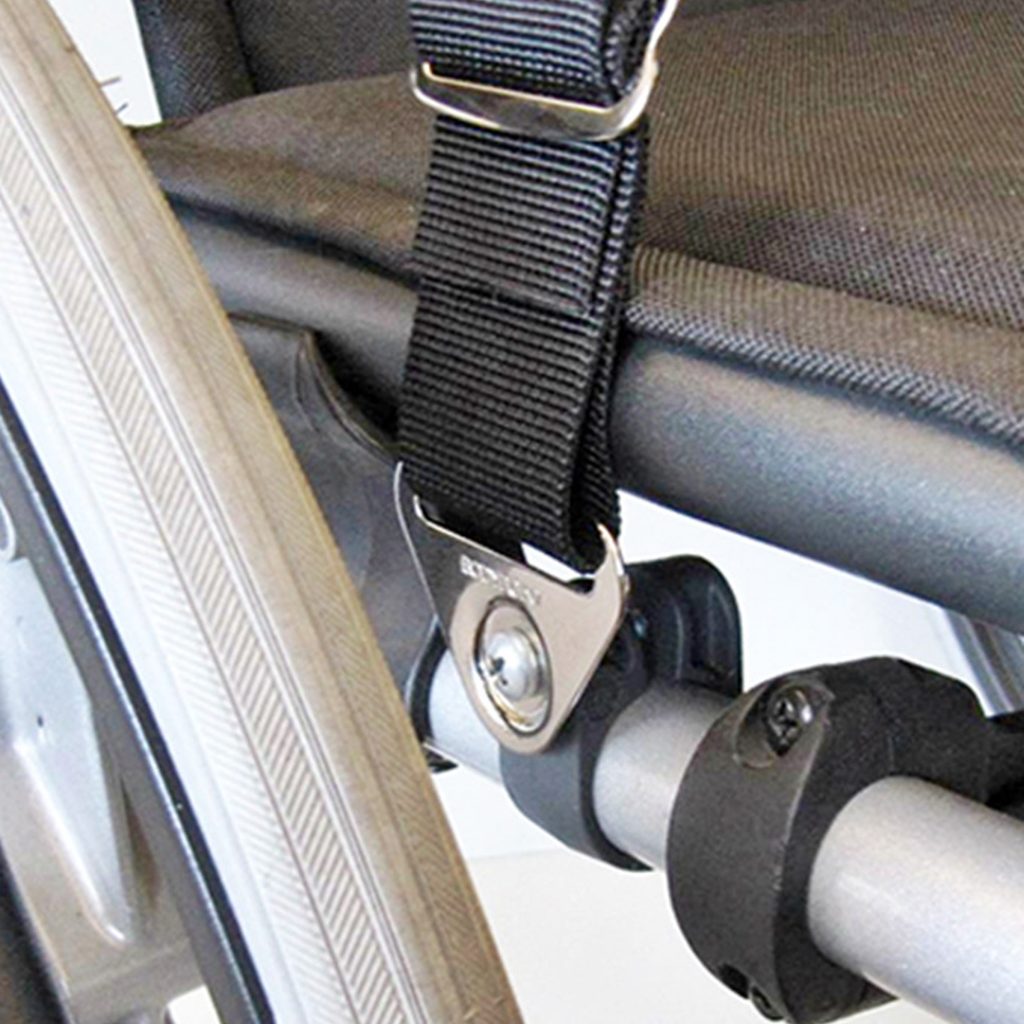
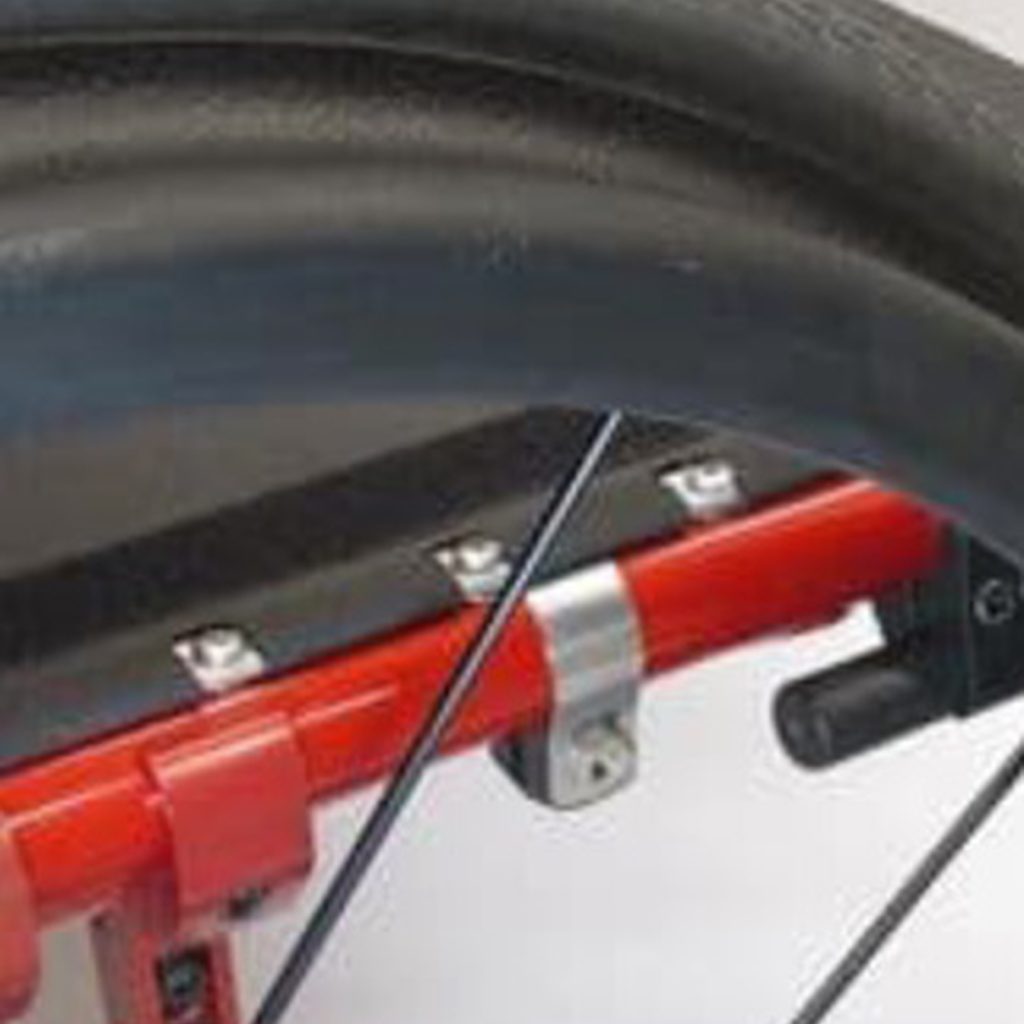
Going back some years, I remember the days when engineers drilled holes into wheelchair frames to be able to mount positioning belts in appropriate positions for the occupant. This ceased when the chair manufacturers pointed out that this might have an adverse affect on the strength of the frame, and this activity voided the chair’s warranty. To meet the need of mounting the belts in the correct position for the occupant’s postural needs (see ISO/TS 16840-151) manufacturers have developed a selection of frame clamps for mounting around the wheelchair frame tubing without affecting the integrity of the tubing (for a couple of examples see Figure 1; further examples are listed in Annex D of ISO/TS 16840-151).
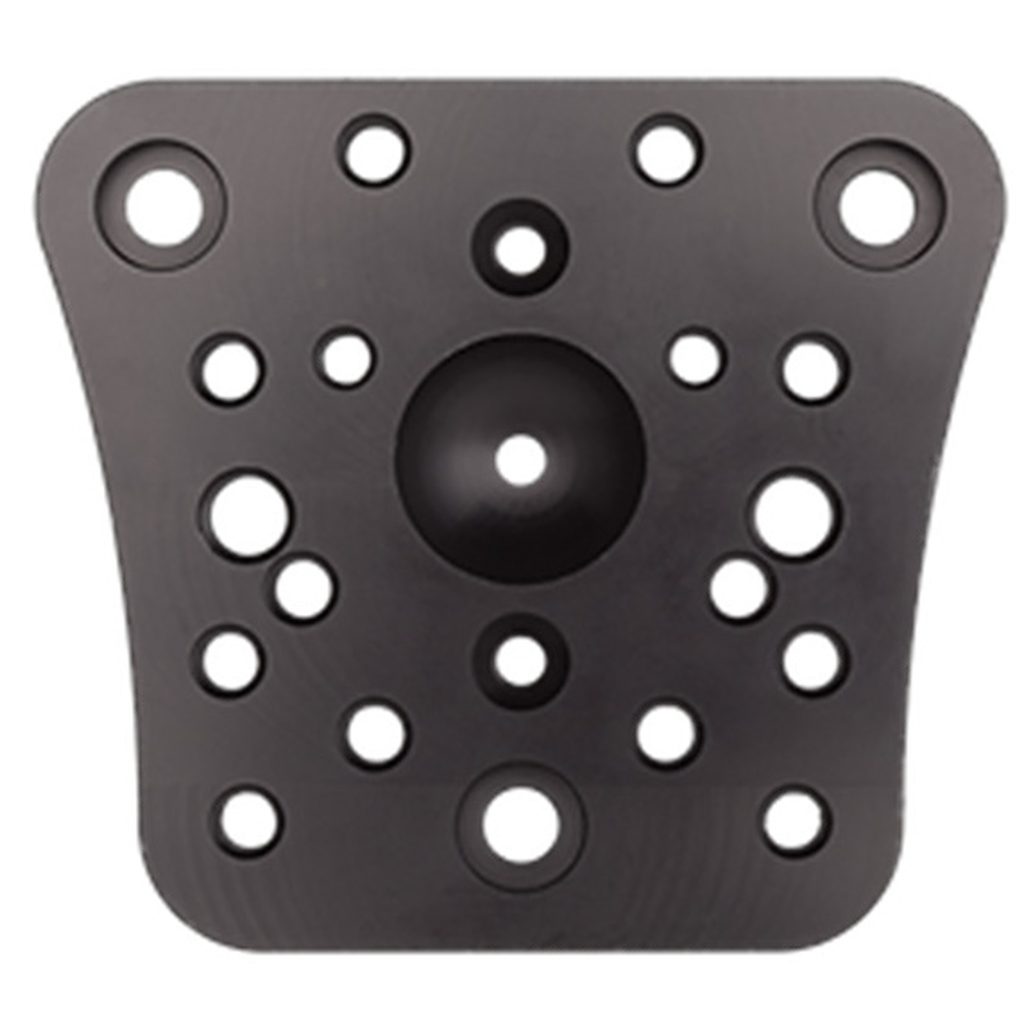
Attaching head support mounts onto a back support can be a challenge. Some manufacturers provide some holes through which their mount can be bolted, while Symmetric Designs offers a Universal Headrest Mounting Plate (Figure 2) to match up with a wider variety of these options.
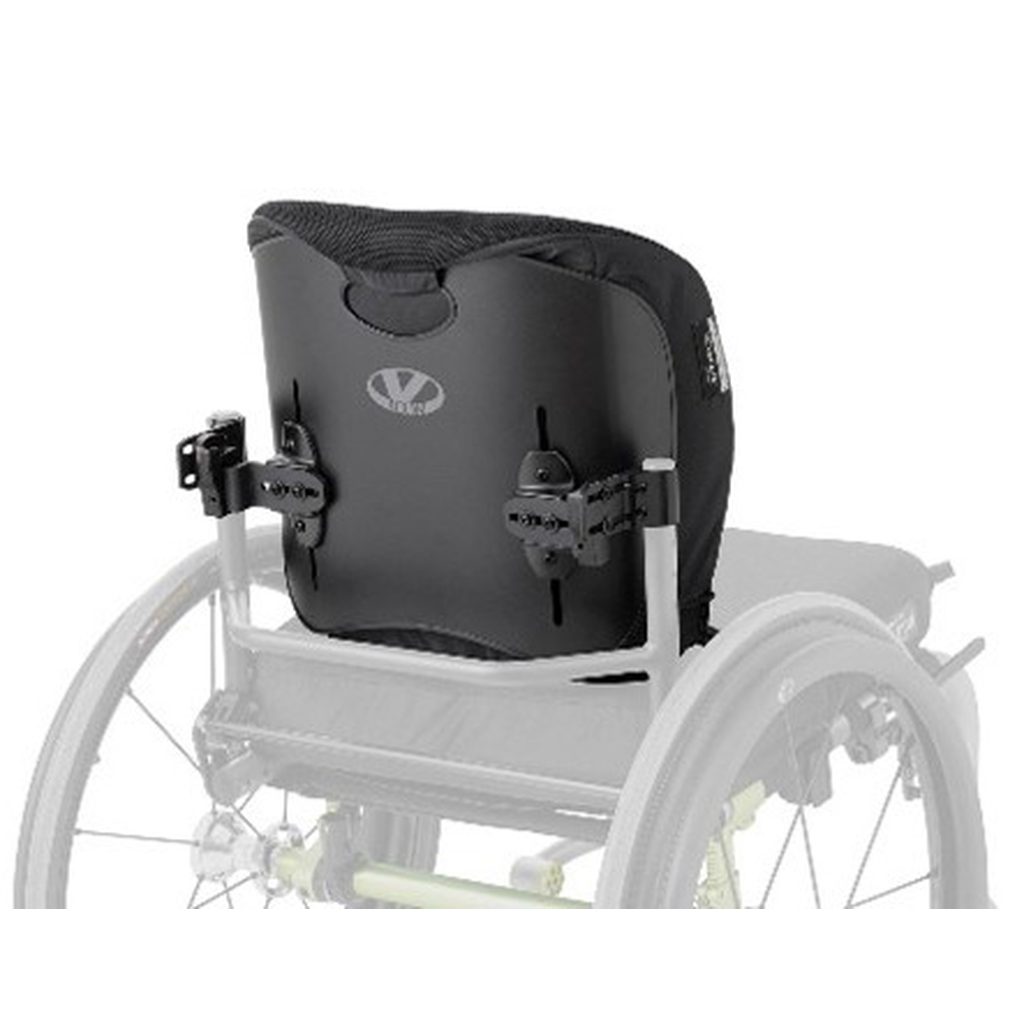
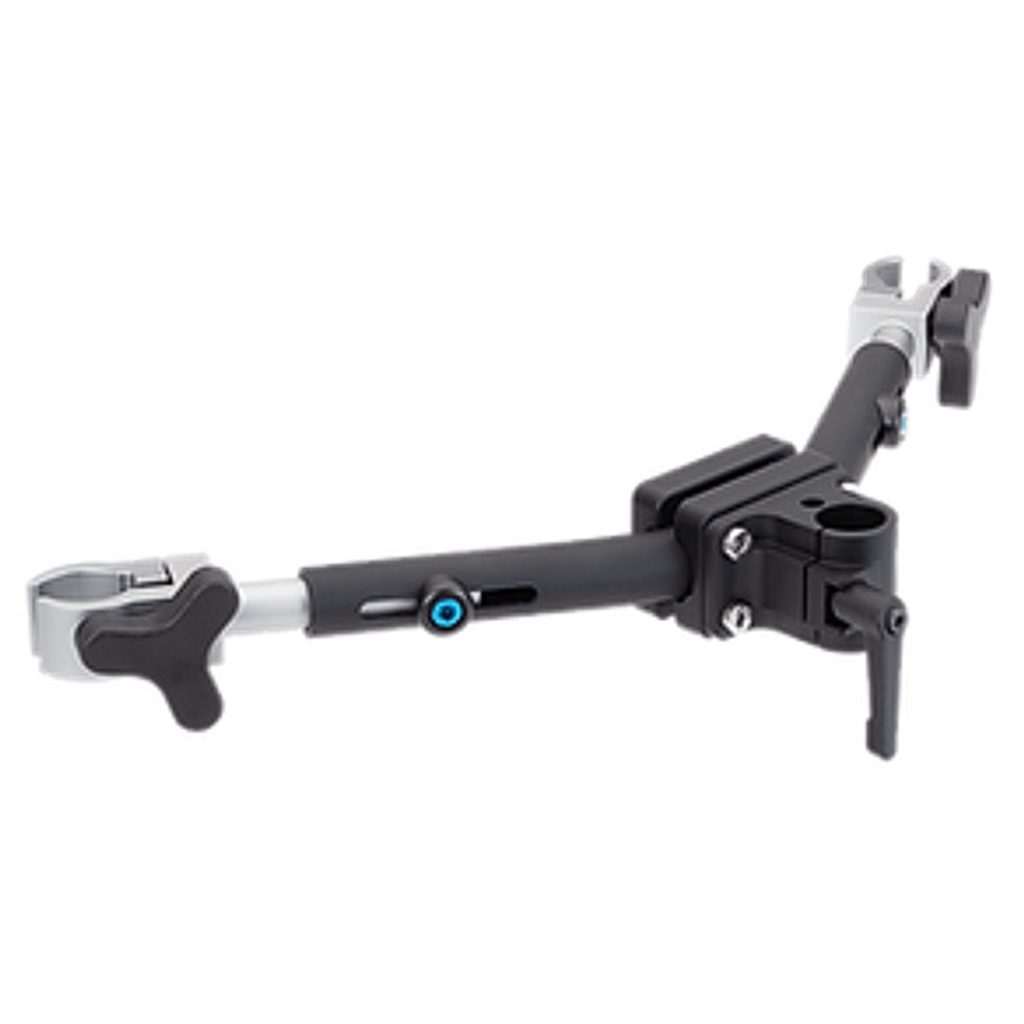
Some manufacturers, such as Varilite with their Icon back support (Figure 3), give the prescriber carte blanche to drill holes wherever they may be needed. Of course, not all back supports are solid, and the solution here might be the Symmetric Designs Clinical Headrest Mounting Adapter (Figure 4) to attach to the frame uprights supporting the canvas back support.
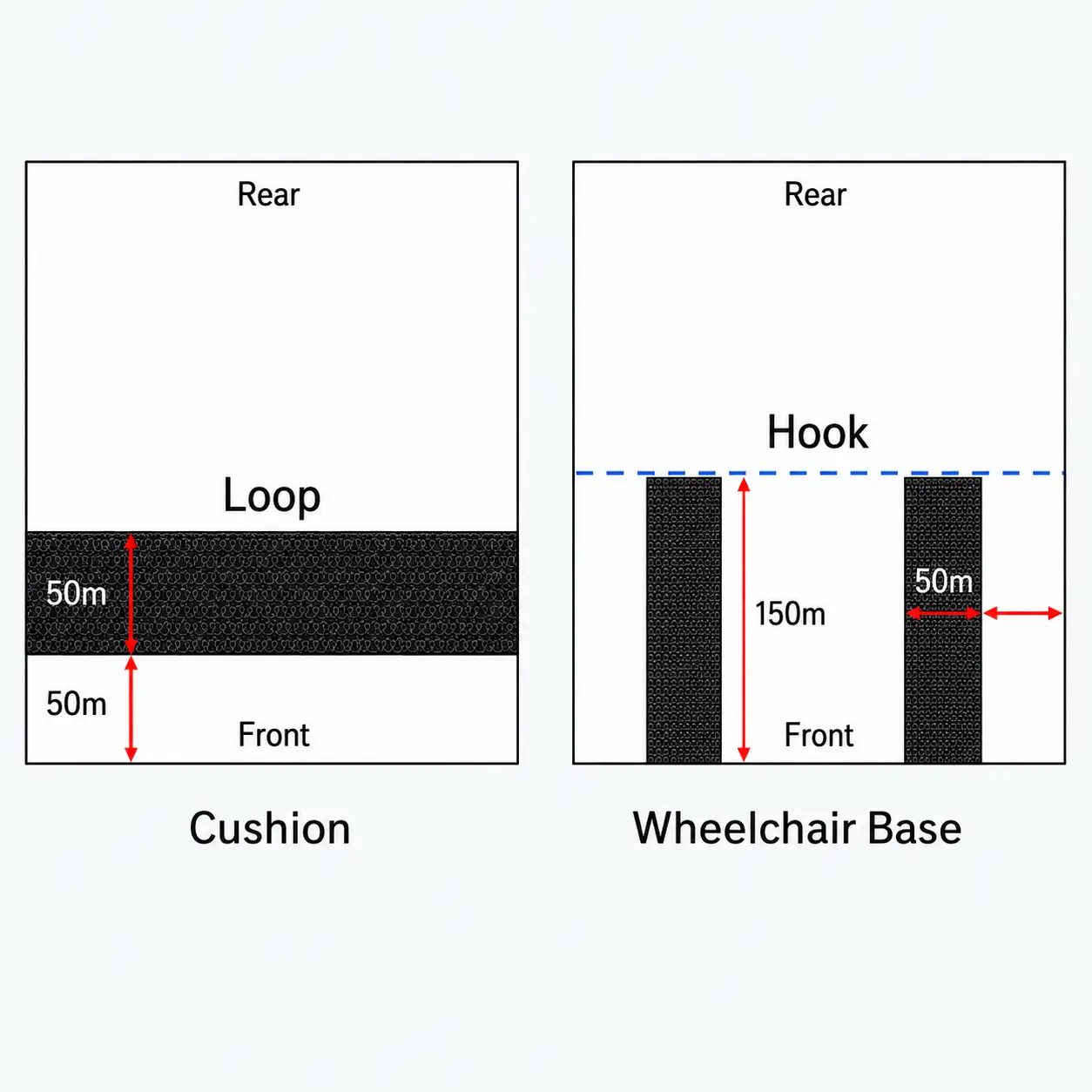
For seat cushions, there’s now a recommended standardised placement of hook and loop strips on the cushion and on the chair for secure placement of after-market cushions on the wheelchair seat base (Figure 5).
Safety standards
When selecting a wheelchair or accessories, there’s a range of European and International standards to which these products are tested. The European standards are BS EN 121832 for manual chairs and BS EN 121843 for powered chairs, and these in turn call up the international standards where relevant.
For wheelchair seating accessories we have ISO 16840-104 for flammability testing, and ISO 16840-35 for testing of static, impact, and repetitive load strengths for postural support devices (PSDs) with their associated attachment hardware.
Whether the belts and harnesses, or any other accessories that you use, are supplied by the wheelchair manufacturer or obtained from an after-market manufacturer, you should ensure that they have been tested to, and passed, the relevant safety standards such as these listed.
Myths
It would be great if every wheelchair accessory could be tested with every wheelchair frame, and a Combination Agreement provided for every permutation. In the real world this is neither feasible nor affordable. Some wheelchair manufacturers have been insisting that if there is not a Combination Agreement in place (referencing the recent European MDR replacement6 for the MDD) the after-market product should not be used. This practice should be discouraged because it is not correct: it is anti-competitive, and worst of all, cuts out potential choices for providing for the best clinical outcome. If a wheelchair manufacturer tries to limit your choice in this way, moving to a different supplier may be your best bet!
For reference: all that the MDR states on the matter is in Clause 14.1: “If the device is intended for use in combination with other devices or equipment the whole combination, including the connection system shall be safe and shall not impair the specified performance of the devices. Any restrictions on use applying to such combinations shall be indicated on the label and/or in the instructions for use.”
Since in most cases we are talking about medical devices (otherwise the MDR does not apply), each product will have its own technical file in which the manufacturer will have recorded their product description and claims, their risk assessments (which will include where and where not their product can be used), and the safety testing that their product has undergone. Any restrictions will be indicated in the instructions for use: those restrictions will have been spelled out specifically by the manufacturer of each product.
The BHTA has produced for its members a guidance document on this topic, following legal advice7.
Modular products
A ‘grey’ area lies around modular devices. To resolve this (covering both modular devices and after-market accessories), the EU Medical Device Coordination Group published a guidance document that defines sub-types of medical devices8. One of these is “adaptable medical devices” and states: “Note 1: Adaptable medical devices (products which fall under (a) above) are mass-produced medical devices which must be adapted, adjusted, assembled, or shaped at the point of care, traditionally by a healthcare professional, in accordance with the manufacturer’s validated instructions to suit an individual patient’s specific anatomo-physiologic features prior to use. Examples of mass produced adaptable medical devices may include:
- certain spectacle frames and optical glasses (assembled together to form spectacles).
- patient fitted wheelchairs.
- hearing aids (otoplastic and amplifier).
- orthotic braces.
- exo-prosthetics.”
A manufacturer has to wade through the distinctions between what is a Medical Device, what is an Accessory to a Medical Device (which is, confusingly, also a medical device), and what are other parts.
For example:
- A wheelchair is a medical device – it can be used by itself.
- A pelvic positioning belt or arm support is an accessory to a medical device – it isn’t designed to be used by itself, but attached to a wheelchair. It is a Medical Device, too, and goes on the manufacturer’s Declaration of Conformity (DoC).
- A mounting clamp or quick-release connector is an accessory to a positioning belt or arm support, but since the MDR doesn’t recognize accessories to “accessories to medical devices”, this category is called something else, such as “mounting hardware”. It will be described in a technical file, but left off the DoC.
It ends up being up to the manufacturer to decide where to draw the line between Accessories to Medical Devices (which are, themselves, medical devices) and other components which will be described in their literature, but which are not strictly essential for the clinical performance of the device.
Crashworthiness
Because it was not realistic to crash test every seating system with every wheelchair, a crash test was developed to create a surrogate wheelchair on which complete seating systems could be tested (ISO 16840-49). To date there is not yet a crash test for parts of a seating system, such as a back or head support (though this is being worked on by the ISO standards Working Groups at present). So if someone claims that an accessory has been crash tested, it would be interesting to establish what test they used! The tests in ISO 16840-3 are designed for low impact loading on postural support devices, and not the higher deceleration forces experienced in a vehicle coming to a sudden stop. An occupant in a wheelchair in a vehicle still needs their positioning devices to be doing their positioning job and to stand up to the forces of normal use and standard driving forces. At this point it is the risk assessment which needs to be created for each case that will indicate the suitability of the required accessory for that individual under their personal circumstances.
Conclusion
Combining products to give the best result for a client’s health, well-being, and safety, is best practice. Under the principles of Do No Harm and Know Your Power, it is up to the prescriber to carry out the appropriate risk assessment, and insist on their selected product combinations that best meet their client’s needs being made available to the client.
References
- ISO/TS 16840-15:2024 Wheelchair seating – Part 15: Selection, placement and fixation of flexible postural support devices in seating.
- BS EN 12183:2022 Manual wheelchairs – Requirements and test methods.
- BS EN 12184:2022 Electrically powered wheelchairs, scooters and their chargers – Requirements and test methods.
- ISO 16840-10:2021/Amd1:2024 Wheelchair seating – Part 10: Resistance to ignition of postural support devices – Requirements and test methods.
- ISO 16840-3:2022 Wheelchair seating – Part 3: Determination of static, impact, and repetitive load strengths for postural support devices.
- https://eur-lex.europa.eu/eli/reg/2017/745/oj/eng (EU Medical Device Regulation 2017/745).
- BHTA guidance: 2026.04.17-Wheelchair-Accessory-Compatibility-Note-FINAL-PDF-no-watermark.pdf.
- MDCG 2021-3 Q & A on Custom-Made Devices, March 2021: https://health.ec.europa.eu/document/download/385d7e20-d8b5-49d0-abd7-8daf269bf1b8_en?filename=mdcg_2021-3_en.pdf.
- ISO 16840-4:2009 Wheelchair seating – Part 4: Seating systems for use in motor vehicles.


